
Last updated November 16, 2026
 Wrought iron
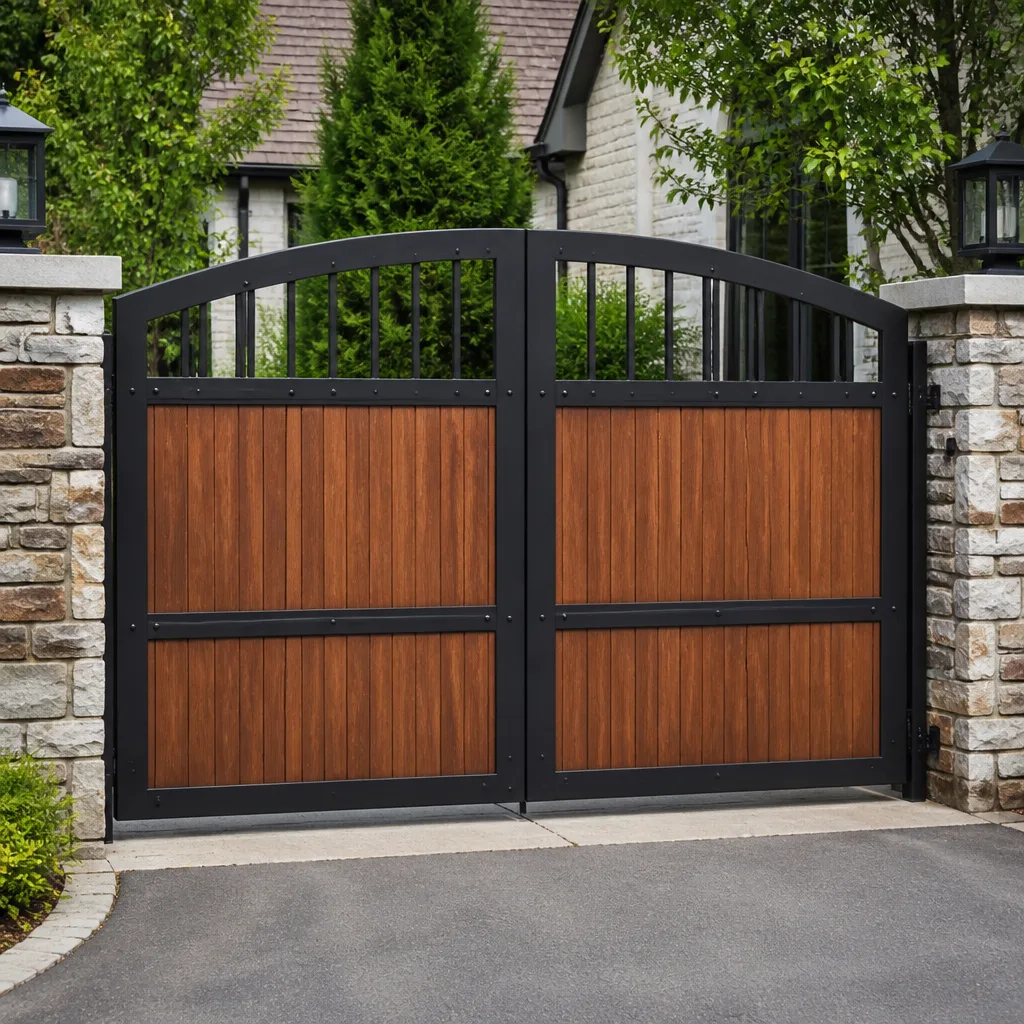 Wood & steel frame
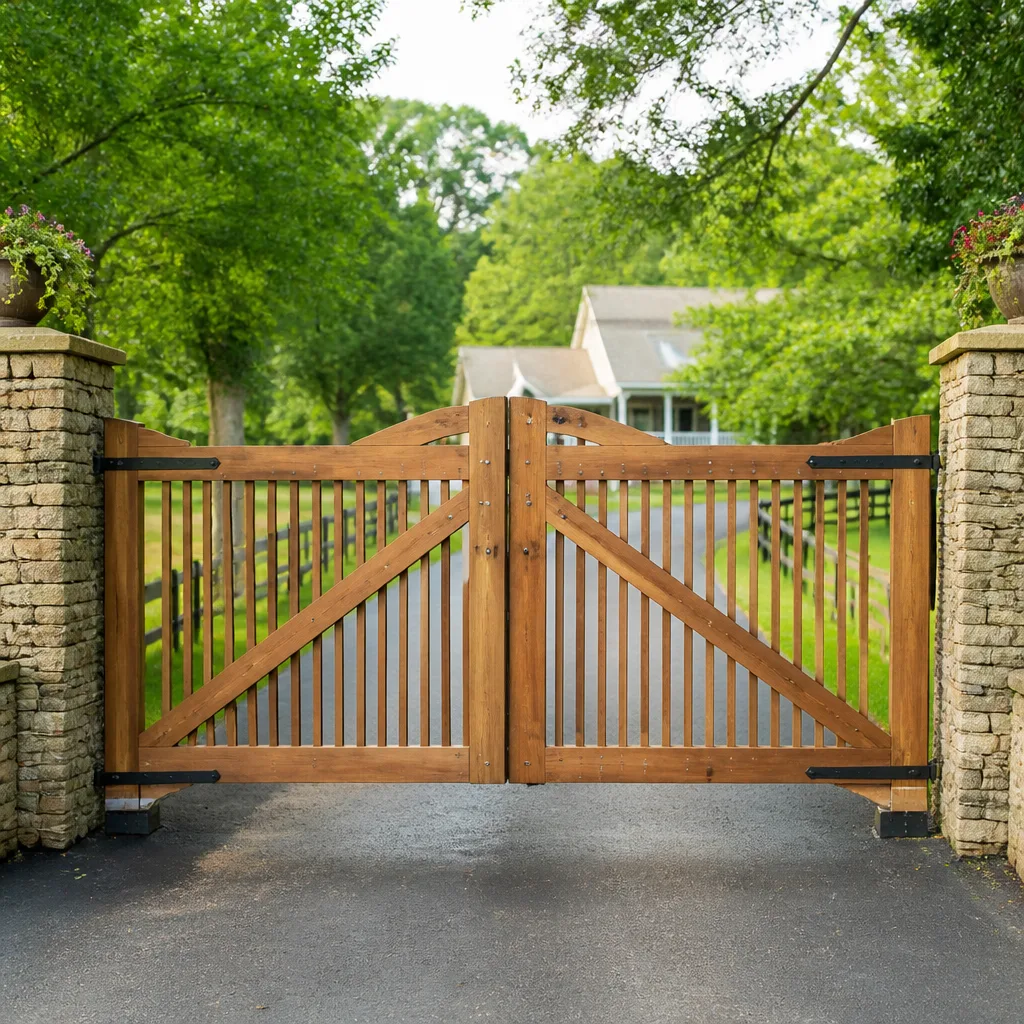 Farm & ranch
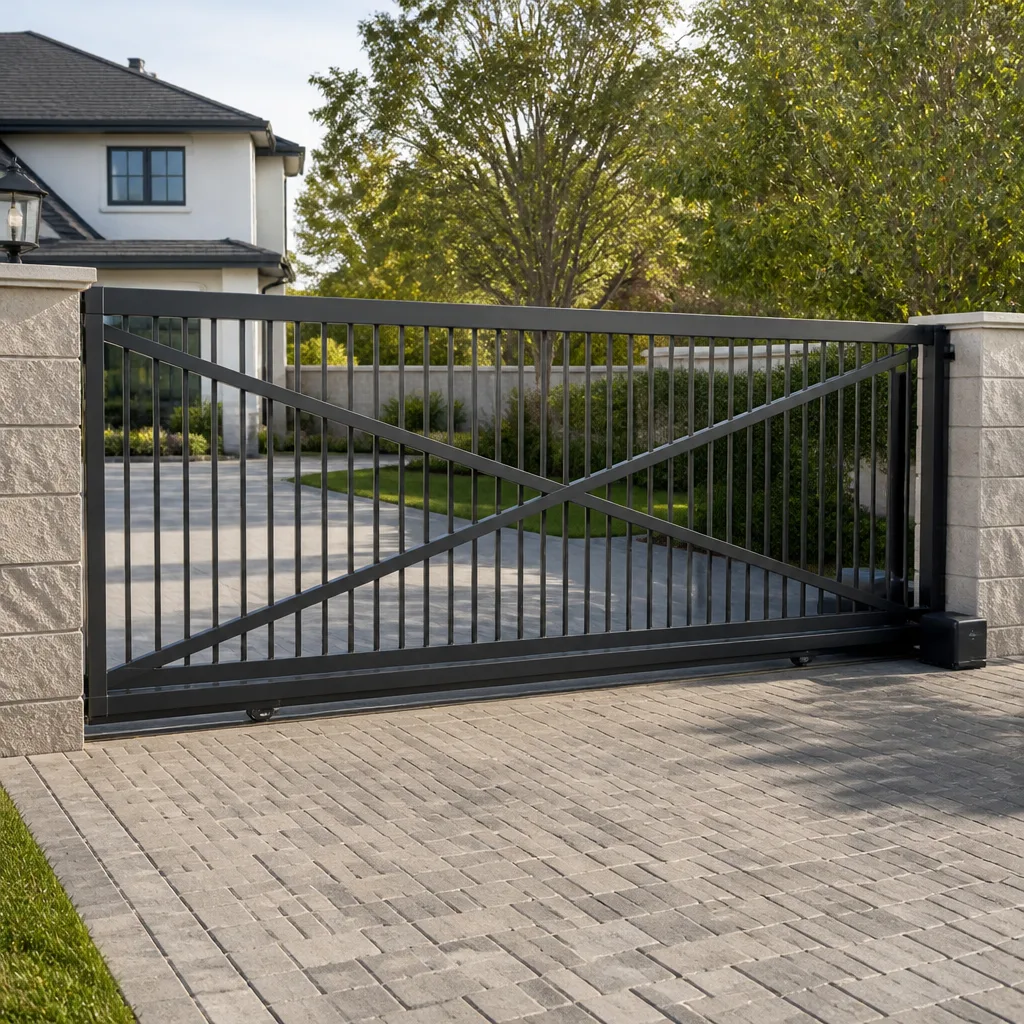 Sliding driveway gates
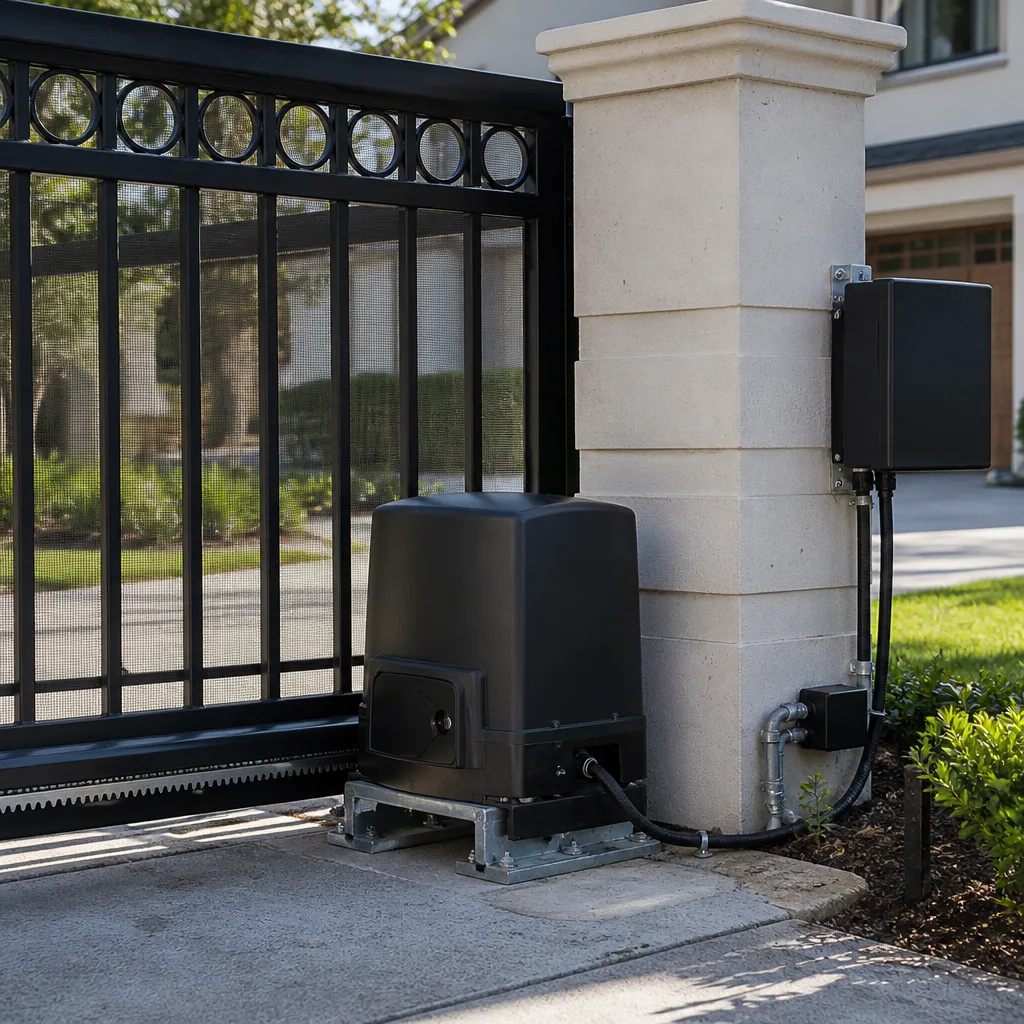 LiftMaster operators
Free on-site gate assessment - hinges, posts, and your LiftMaster or Nice gate operator checked before anything is quoted
The assessment is free and the quote is the invoice.
Get your free estimateGate Repair Emergency Preparedness Guide for Glendale Homes
Most gate advice focuses on what to do once the gate has already failed. That’s too late. The moment your gate stalls halfway open during an evacuation order, the time for planning has passed. What separates a ten-minute fix from a genuinely dangerous situation isn’t luck – it’s whether the person at the keypad knows how their specific operator releases by hand. Glendale sits in a region where wildfire evacuation orders, rolling power shutoffs, and seismic activity aren’t abstract risks, and each one stresses an automated gate differently. This guide walks through the emergency scenarios that actually happen here, how to release each major operator type, what to do in the critical first ten minutes, and how to test your battery backup before you need it.
Quick Answer
The most important step in gate emergency preparedness is knowing how to manually release your specific operator before an emergency, since every major brand – LiftMaster, DoorKing, Viking, FAAC, and others – uses a different release mechanism, and knowing yours takes under a minute once you’ve practiced it. Second is testing your battery backup every few months, because Glendale’s summer heat shortens battery life and a backup that fails silently leaves you locked out or exposed. Third is having a gate specialist’s number saved and knowing what to tell them, since a gate-only technician diagnoses an electric failure faster than a general contractor who has to guess.
Styles & brands we work with
- Wrought iron
- Wood & steel frame
- Farm & ranch
- Sliding driveway gates
- LiftMaster operators
Table of Contents
- How Do You Manually Release a Gate Operator?
- Which Emergencies Actually Threaten Glendale Gates?
- What Should You Do in the First 10 Minutes of a Gate Failure?
- How Long Does Gate Battery Backup Last in Glendale’s Heat?
- How Does Earthquake Ground Shift Affect a Gate?
- Who Should You Call – and What Should You Say?
- What Belongs in a Gate Emergency Kit?
How Do You Manually Release a Gate Operator?
Every automatic gate has a manual release, and every brand hides it in a different place. Knowing yours is the single most valuable piece of emergency prep you can do, and it takes one practice session in daylight to lock into memory. Here’s how the release works across the operator types we service most often in Glendale.
LiftMaster operators typically use a manual release lever or a keyed release on the housing. On most residential models, you turn a release key or pull a lever, then physically push the gate open by hand. The lever disengages the drive gear so the gate swings free. Practicing this once tells you how much resistance to expect.
DoorKing commercial-grade operators usually feature a release mechanism under a locked cover – often a mechanical release handle or a chain-hoist override on slide gate models. Larger vehicular gates rely on a floor-level release. Because DoorKing systems are common on multi-unit Glendale properties, property managers should map out the release for every gate on site, not just the main entrance.
Viking swing operators generally release via a keyed lever on the operator arm housing. Turn the key, lift the lever, and the arm disengages so the gate can swing manually.
FAAC operators typically have a release key that unlocks a manual release knob, which you rotate to disengage the motor. On heavier commercial FAAC arms, the gate may need a firm push to move once released – practice so you know.
BFT and Ghost Controls follow similar lever-and-key patterns; Ghost Controls residential units are usually the simplest to release by hand. Get familiar with yours before an emergency forces you to figure it out in the dark.
Installation and electric work should always be handled by a trained professional – never attempt to rewire an operator or bypass safety edges yourself. A gate specialist handles the electrical side safely, and we’re experienced with all these systems across a range of Glendale properties.
Which Emergencies Actually Threaten Glendale Gates?
Not every emergency stresses a gate the same way. In Glendale, three scenarios come up repeatedly, and understanding how each affects the operator helps you respond correctly instead of improvising.
Wildfire evacuation orders. When evacuation orders hit near the Verdugo Hills or the canyons, residents need to move vehicles out fast. A gate that fails closed during an evacuation is a serious blockage. The fix is knowing your manual release and having the vehicle staged – not waiting to diagnose the operator mid-evacuation. If your gate is dependent on grid power and PG&E shuts it off, the gate won’t move without battery backup or a manual release. Pre-evacuation is the moment to test that both work.
Power outages. Rolling shutoffs and storm outages cut the operator’s power source. A gate with functional battery backup keeps working for a while; a gate without one becomes a manual gate immediately. The difference between a smooth outage and a panicked one is whether you’ve tested the battery recently.
Earthquake-related ground shift. Glendale sits in seismic country. A quake can shift posts, misalign hinges, or knock a slide gate off its track. A gate that shifts may still open but bind against the ground, damaging the operator motor as it strains. After a significant quake, walk the gate’s path by hand before powering it – check that it swings or slides freely and isn’t grinding.
Each scenario should have its own plan. A wildfire plan is about fast exit; a power outage plan is about backup duration; an earthquake plan is about checking alignment before operation. Write them down and keep them with your gate documentation.
What Should You Do in the First 10 Minutes of a Gate Failure?
The first ten minutes determine whether a gate failure stays a repair or becomes a security problem. Act in this order.
- Stop operating the gate. If the gate is straining, grinding, or moving erratically, stop pressing the remote. Continuing to cycle a binding gate can burn out the motor or control board.
- Determine the gate’s position. Is it stuck open, closed, or mid-travel? A gate stuck open on a perimeter is a security exposure. If it’s open, secure the property another way – park a vehicle across the opening or post someone at the entrance until it’s fixed.
- Check the obvious: power, then breaker. Confirm the operator has power. Check the control panel or breaker feeding the gate, if accessible. A dead circuit looks like a dead operator.
- Test the manual release. If the gate needs to move and won’t, use the release you practiced. This is a controlled release, not a repair – you’re clearing the path for safety.
- Note what you see and hear. Error codes on the control board, a grinding noise, a clicking relay, a blown fuse – these details speed up diagnosis. Photograph any error display.
- Call a gate specialist and describe the failure. Have your operator brand ready (LiftMaster, FAAC, BFT, Viking, DoorKing, Ghost Controls, Linear, Elite, or Mighty Mule). A specialist who works on that exact brand diagnoses faster than someone who doesn’t.
Doing these in order protects both your security and your equipment. Skipping step one and forcing a jammed gate is the most common way a small repair becomes a motor replacement.
How Long Does Gate Battery Backup Last in Glendale’s Heat?
Battery backup is what keeps an automatic gate working through an outage – but it’s only as good as its condition, and Glendale’s summer heat is hard on batteries. Most gate backup batteries are sealed lead-acid or similar chemistry, and heat accelerates their degradation. A battery that would last several years in a cooler climate may need replacing sooner here.
How long a backup actually runs the gate depends on the operator and battery size. A residential swing operator on standby might hold charge for a day or two of normal use; a commercial slide gate cycling frequently under heavy use drains far faster. Don’t assume a capacity – test it.
How to test your battery backup before you need it:
- With the gate closed and the operator on standby, cut power at the dedicated breaker feeding the gate only.
- Press the remote and confirm the gate operates on battery alone.
- Watch for sluggish movement or immediate failure – both signal a weak battery.
- Restore power and note how many cycles the battery delivered.
- Repeat every few months, and after any heat wave.
If the battery fails the test, replace it. This is one of the cheapest, highest-value pieces of preparedness you can do. For electric gate repair on battery and charging systems, a specialist can also verify the charging circuit is actually topping the battery up – a battery can be fine while the charger is failing.
How Does Earthquake Ground Shift Affect a Gate?
Ground movement is the quiet threat to Glendale gates. It doesn’t announce itself the way a power outage does, and the damage shows up days or weeks later as a gate that suddenly binds. After a noticeable quake, run a physical check before you power the operator.
Walk the gate by hand. Release it from the operator and move it through its full travel. A swing gate should clear its arc without scraping. A slide gate should roll smoothly on its track. Any new binding, grinding, or resistance is a sign the ground or posts have shifted.
Inspect the posts and hinges. Look for gaps at the base, tilted posts, or hinge sag. A post that’s rotated slightly can misalign an entire gate.
Check the track on slide gates. A slide gate that’s come off its track is a safety hazard – the panel is heavy and can crush. Don’t run the operator and don’t try to force it back on track yourself. Secure the area and call a specialist.
If the gate moves by hand but the operator strains, the operator may be fine and the alignment off. Diagnosing which is which requires the right tools. Our technicians have up to 13 years of experience and can tell you whether the issue is alignment, hardware, or the operator itself – and we’ll tell you honestly whether repair or replacement makes sense.
Who Should You Call – and What Should You Say?
What you say on the phone determines how fast help arrives. A gate specialist asks different questions than a general contractor, and giving them the right information up front cuts diagnostic time.
Call a gate specialist, not a general contractor. A general repair service may take the job but often has to guess at the operator brand and control board. A gate-only specialist recognizes the system instantly – whether it’s a residential Mighty Mule or a commercial DoorKing – and usually knows the failure modes for that model.
Have this ready when you call:
- The operator brand (LiftMaster, FAAC, BFT, Linear, Viking, Ghost Controls, DoorKing, Elite, or Mighty Mule)
- The gate type – swing or slide – and whether it’s a single or double gate
- Whether the gate is stuck open, closed, or mid-travel
- Any error codes, sounds, or smoke, and whether power is confirmed
- Whether it’s on a residential or commercial property
A gate specialist who works your brand arrives prepared. When you call us, we answer 24/7, and a call outside dispatch hours is booked into the next opening, Sunday through Friday, 7am to 7pm. We dispatch from 7am to 7pm, seven days except Saturday. For full-service gate repair in the Glendale area, having a specialist confirm the brand and symptom on the call is the fastest path to a same-day fix.
One detail worth saying clearly: if the gate is stuck open on a perimeter and you can’t secure the property, say so first. That changes the response priority.
What Belongs in a Gate Emergency Kit?
A small kit and a written plan turn an emergency into a manageable interruption. Put this together before you need it.
- Your operator’s manual and release instructions, printed and kept with the gate or in the vehicle’s glovebox. You won’t remember the release during an evacuation.
- A working flashlight and spare batteries, in case power is out when the gate fails.
- A spare remote and keypad code, tested and stored separately.
- Your manual release key or lever tool, if your operator requires one.
- A written emergency plan for wildfire, outage, and quake – with your specialist’s number saved.
For multi-unit or commercial Glendale properties, add a floor plan showing every gate and its release location. Property managers should train at least two people per site on the release, so the knowledge isn’t held by one person.
Common Mistakes to Avoid
- Never practicing the manual release until an emergency. Reading the manual during an evacuation order is not the time to learn the lever. Practice once in daylight.
- Forcing a jammed gate with the remote. Repeatedly operating a binding gate cooks the motor. Stop and diagnose before you cycle it again.
- Assuming the battery backup works without testing it. A backup that fails silently leaves you locked out or exposed. Test it every few months, especially before fire season.
- Calling a general contractor for an electric gate fault. A generalist may not recognize the control board, and Glendale heat and seismic activity add quirks they won’t anticipate.
- Ignoring a gate that shifts after an earthquake. A gate that binds after a quake is often misaligned, and running the operator can worsen the damage. Walk it by hand first.
- Skipping the post-quake track check on slide gates. A slide gate off its track is a crushing hazard. Don’t force it – secure the area and call.
- Replacing an operator before diagnosing alignment or hardware. Sometimes the gate, not the motor, is the problem. Get an honest diagnosis before spending on a new operator.
See the difference
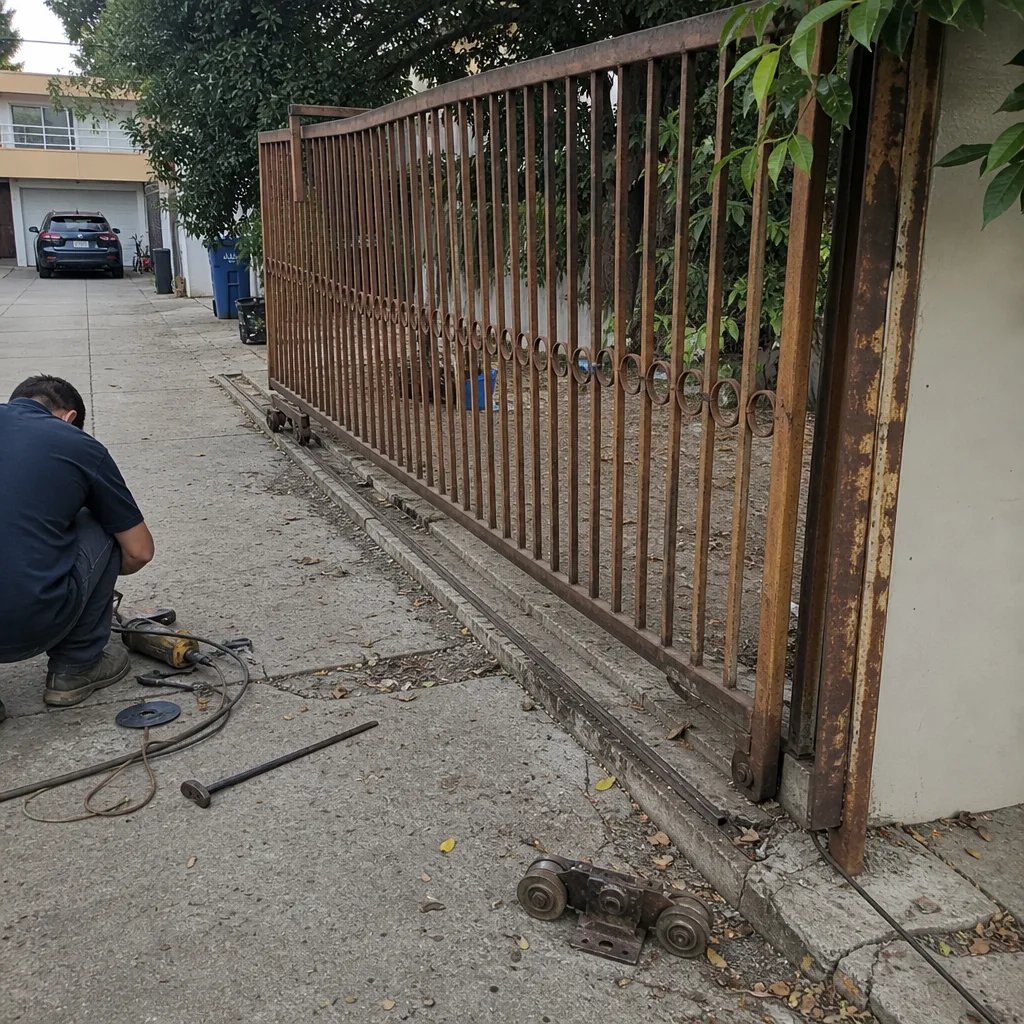 Before
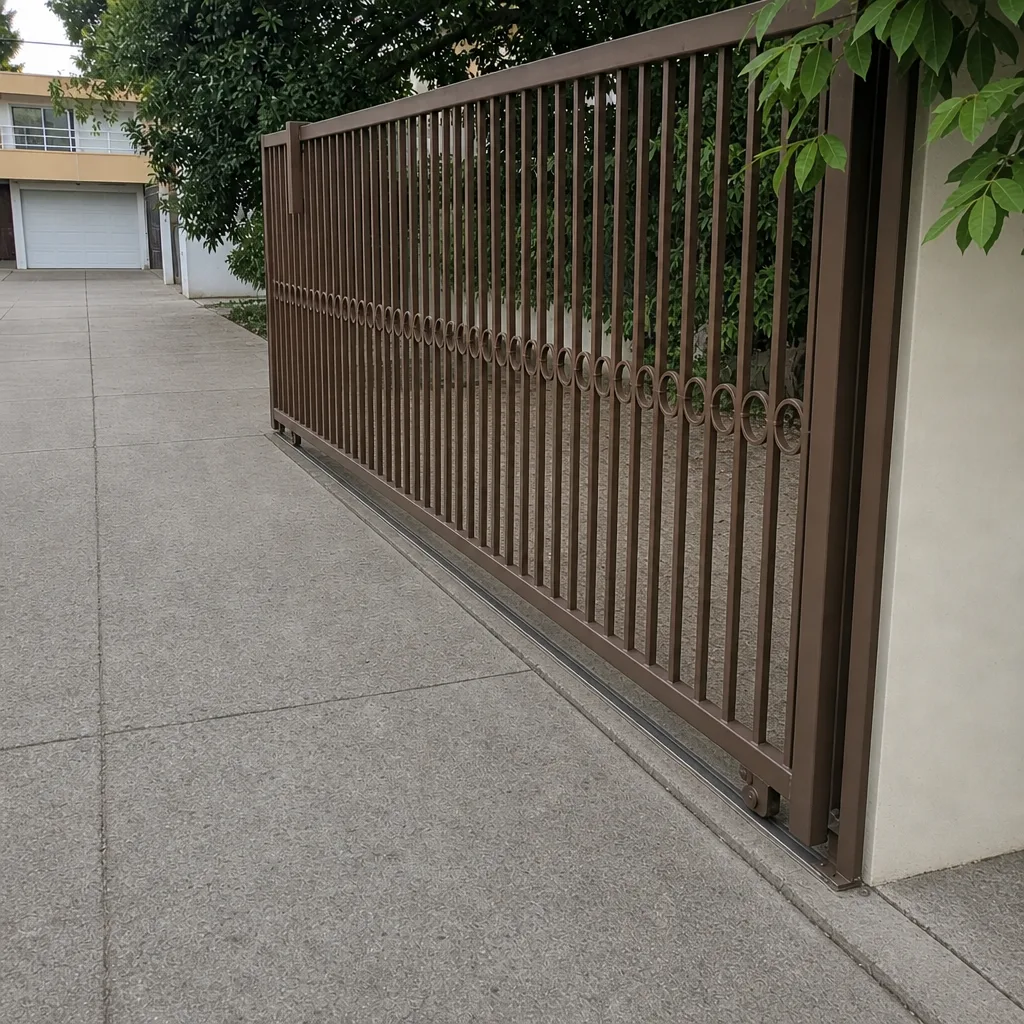 After
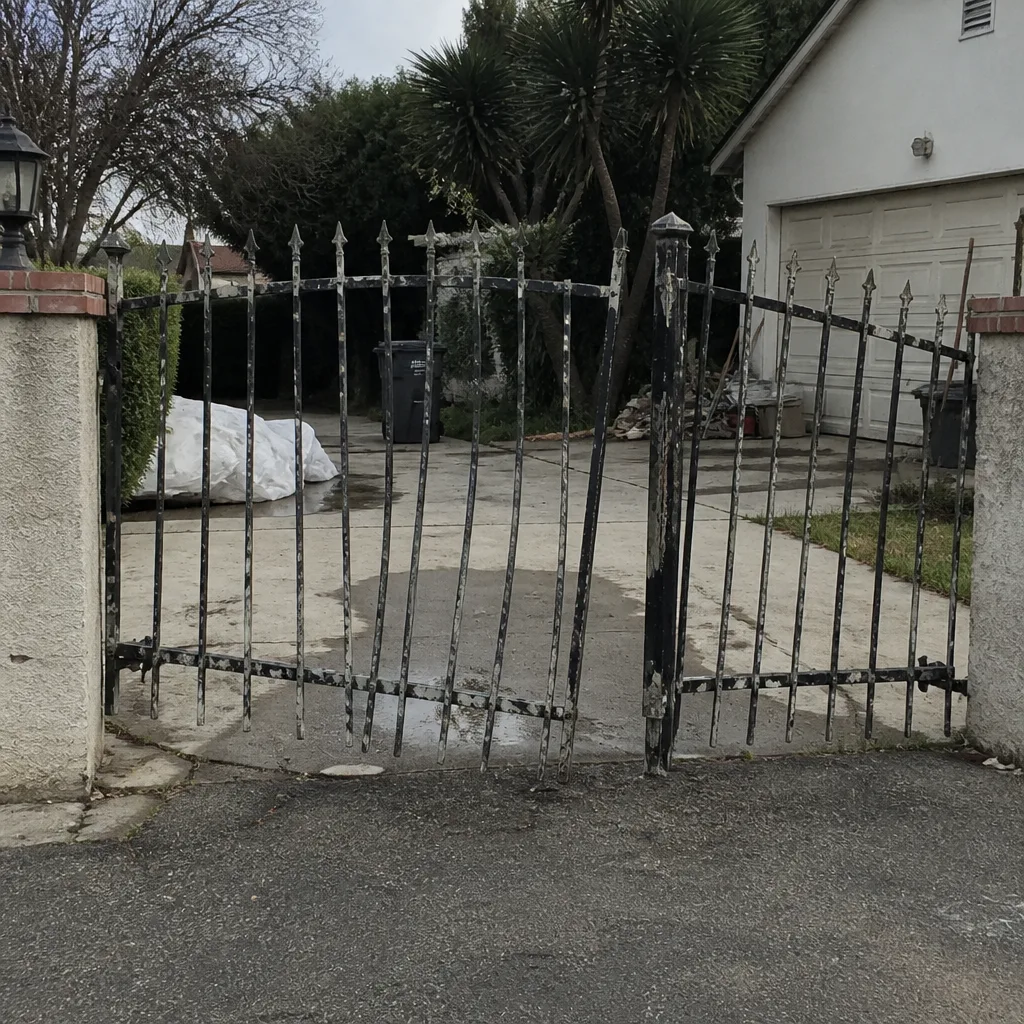 Before
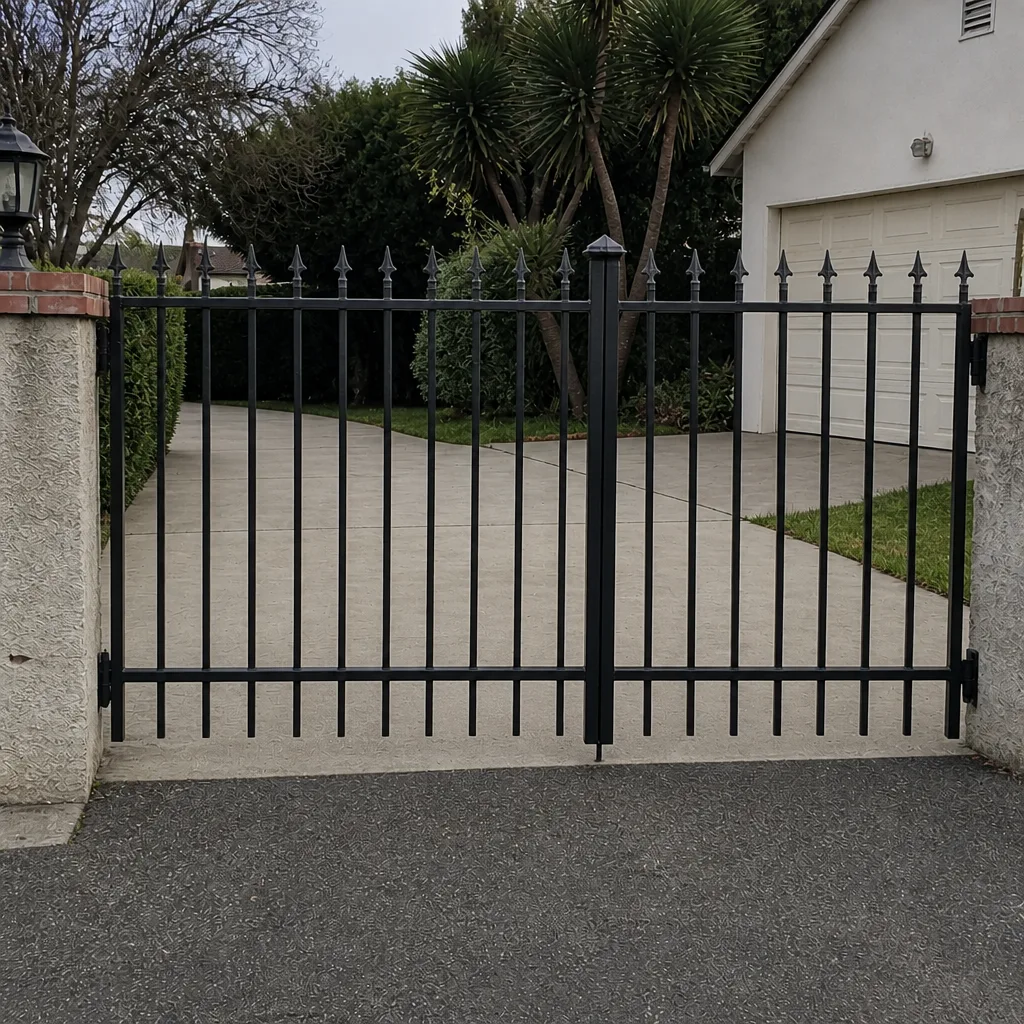 After
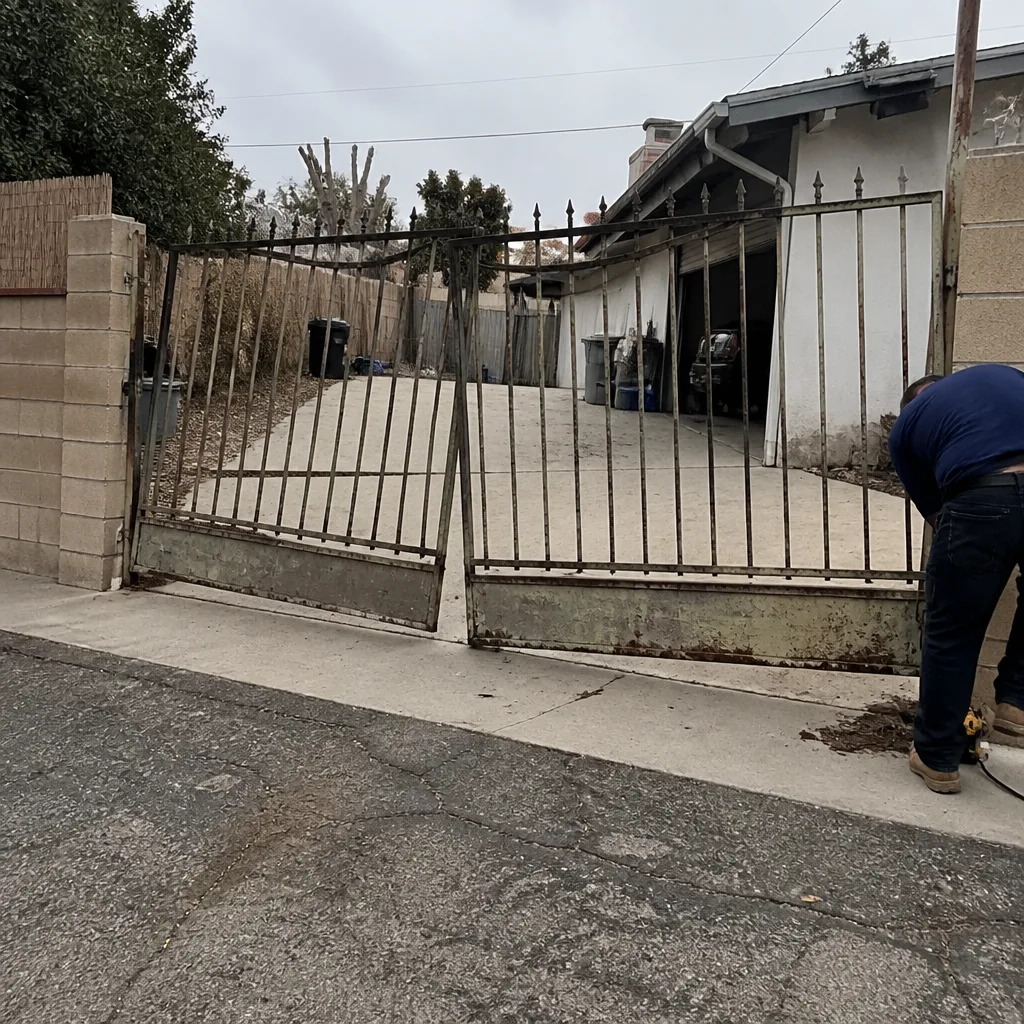 Before
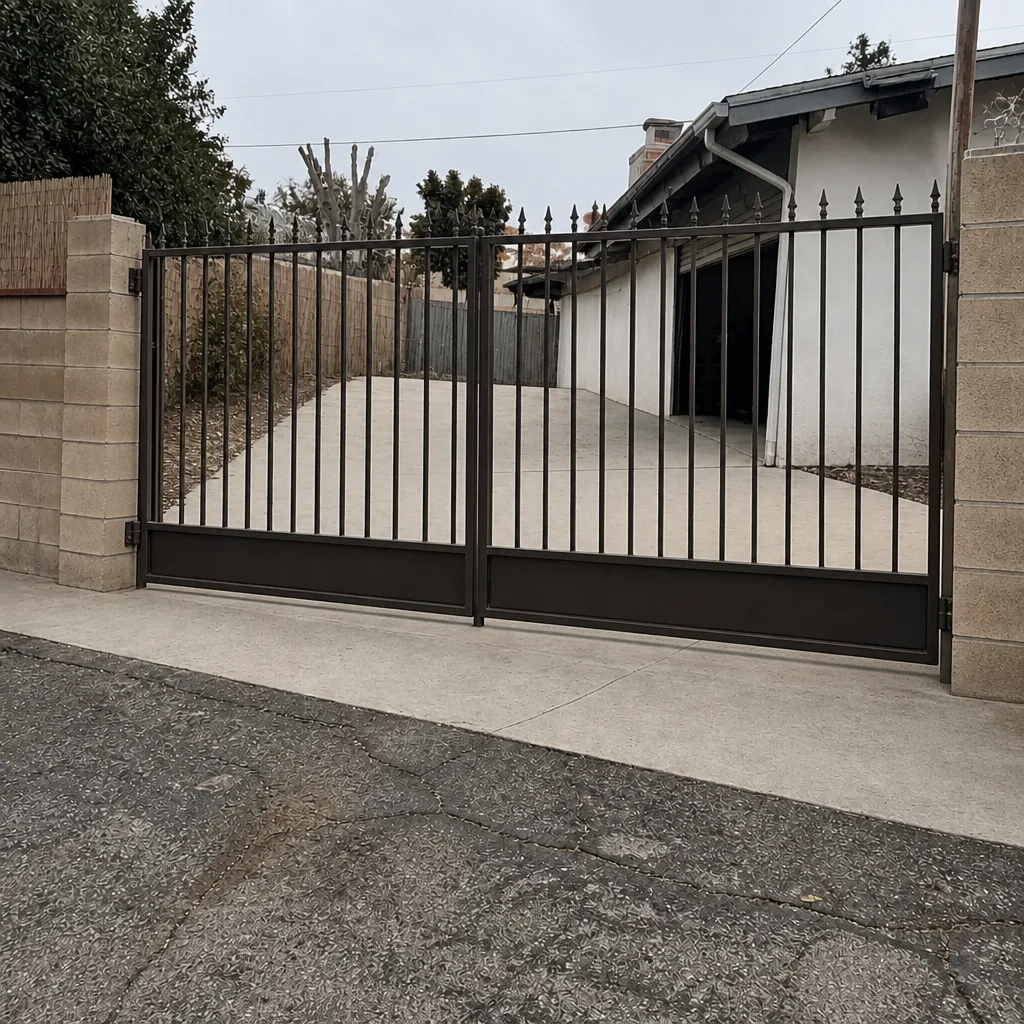 After
When to Call a Professional
Some gate issues are safe to handle with a manual release and a reset. Others need a specialist. Call us when: the operator won’t respond to any input, error codes appear on the control board, the gate binds or grinds after an earthquake, a slide gate has come off its track, the battery backup won’t hold a charge, or the gate is stuck open and you can’t secure the perimeter. Electric work – motors, control boards, wiring, and safety edges – should always be handled by a trained professional, never attempted as DIY, because the operator’s power and safety circuits carry real risk. Glendale Gate Repair offers free estimates in Glendale – call (888) 853-9043. We work the brand you already have, from a residential Ghost Controls to a commercial FAAC, and we’ll tell you honestly whether the gate needs repair or replacement.
Frequently Asked Questions
The release depends on the brand: LiftMaster and Viking usually use a keyed lever on the arm housing, DoorKing and FAAC have a keyed release knob or handle under a cover, and Ghost Controls residential units release via a simple lever. Locate yours, practice it once, and keep the key or tool handy. If you’re unsure how yours releases, call (888) 853-9043 for an exact quote on a release check – estimates are free.
A battery backup’s runtime depends on the operator and battery size, but Glendale’s summer heat shortens backup battery life, so you should test it every few months by cutting the gate’s dedicated power and confirming the gate runs on battery alone. If it’s sluggish or fails, the battery needs replacing. Call (888) 853-9043 to have a specialist check the battery and charging circuit – estimates are free.
Use your manual release to get the gate open by hand, move the vehicle out, and call once you’re clear. The manual release is the fastest way to clear a blocked exit, which is why practicing it before an evacuation order matters. If your gate depends on grid power, test the battery backup before fire season. Call (888) 853-9043 for an exact quote on a preparedness check – estimates are free.
Many gate failures can be fixed the same day when a specialist recognizes the brand and symptom on the call – having your operator brand, gate type, and any error codes ready speeds things up. Call (888) 853-9043. We answer 24/7. Fast dispatch from 7am to 7pm, Sunday through Friday.
Sometimes yes – a gate that still opens may be misaligned or straining, which wears the motor if left alone. After a noticeable quake, walk the gate by hand and check posts, hinges, and any slide track before powering it. If it binds or grinds, call (888) 853-9043 for an exact quote – estimates are free.
Yes, we handle both residential and commercial gate repair, from entry-level residential systems like Mighty Mule and Ghost Controls to commercial-grade systems like FAAC, BFT, and DoorKing. We’re gate-only specialists, so we diagnose the actual brand installed rather than working around it. For Glendale properties, call (888) 853-9043 for a free estimate.
The Bottom Line
Gate emergency preparedness comes down to three habits: know your manual release, test your battery backup, and have a specialist’s number saved. Glendale’s wildfire evacuations, power shutoffs, and seismic activity all stress a gate in different ways, so each deserves its own plan. A gate that fails closed traps you; one that fails open is a security gap. Neither needs to catch you unprepared. Practice the release in daylight, check the battery before heat season, walk the gate after a quake, and call a gate specialist rather than a generalist when something sounds wrong. That’s the difference between a ten-minute fix and a real problem.
Glendale Gate Repair specializes exclusively in gate repair, electric gate repair, and gate installation. We work the brand you already have – LiftMaster, FAAC, BFT, Linear, Viking, Ghost Controls, DoorKing, Elite, and Mighty Mule – for both residential and commercial properties. The estimate is free, the price is quoted and agreed before any work starts, and we’ll tell you honestly whether repair or replacement makes sense. Call (888) 853-9043. We answer 24/7. Fast dispatch from 7am to 7pm, Sunday through Friday.
Written by the team at Glendale Gate Repair.